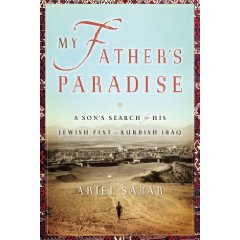
 I just finished reading through My Father’s Paradise
Ariel Sabar has an interesting past. His father was forced from his home in Zakho, which is now Kurdish Iraq, post World War II. This book is Sabar’s journey back to his family’s homeland. What makes it so unique and interesting is that his father came from a group of Kurdish Jews that were so isolated from the rest of society that they spoke Aramaic, which is largely unspoken these days and is on the verge of being a dead language. (Coincidentally, My Father’s Paradise
In this book, Ariel Sabar documents the journey he (and his father!) took back to Iraq, searching for a past which includes the language Jesus spoke. I found this story well-told and utterly fascinating. It is compelling, amusing, thought-provoking and just plain interesting. There are a few disturbing things to think about, but I really thought Sabar did a good job at painting a good picture of his past with all of the personalities and family history involved, and the present.
If you would like more information, here is a video containing more about Sabar, his journey, this book and reengaging with Jewish cultures and traditions. (The video is admittedly long but I listened to it while I was working online for a bit. Fascinating stuff!)
Carrie comes by her book obsession honestly, having descended from a long line of bibliophiles. She blogs about books regularly at Reading to Know and Reading My Library.
We’re reading this book for my Jan. book club and can’t wait to start it up. I’ll save the video for after I’ve read the book. Thanks!
Thanks for the brief review of this book, and the link to the video. It sounds a great book, and the link to Aramaic is most interesting, how Aramaic is still spoken in isolated villages around the Middle East even today.