Writing


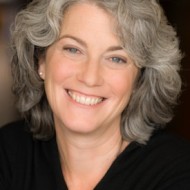
jennienashA cool thing about being a book reviewer is sometimes being able to chat offline with authors whose books I enjoy. If I read and review one of his or her books, especially when I really like it, then he or she will often offer me the next book that comes out, and sometimes we get friendly via email. At the very least, I go on a list where I know I’ll hear about the next project. I love that.  Jennie Nash is one of those authors for me.  I wrote about that, as well as linking to my reviews of her other novels, when I reviewed her latest novel Perfect Red.

I was intrigued that she self-published this novel. I know that self publishing is becoming more popular, and even music artists are producing their own records without a major label, so I really wanted to hear her perspective on this trend. I thank her for her honesty in this interview. If you like what you read here, why not give her novel Perfect Red a try? Another delightful by product of self-publishing is that the authors generally offer the ebooks at a very low cost ($2.99 in this case, cheaper than a movie rental!).

Q: After six books published with major New York houses, you decided to self publish your novel Perfect Red.. Why?

A: To be perfect honest, I had no other choice. Publishers pay the most attention to blockbuster authors, series authors who can move a lot of books, and debut authors who may have written the next big thing. I was neither of those things. I was a midlist writer getting midlist attention and it was starting to feel a big like purgatory. I’d written six books, and none of them had sales that would warrant anyone’s attention. I wrote Perfect Red to try to jump start my career. It was something new for me – a historical novel — and I thought I could use that to take a giant leap forward. It almost happened (that’s a l-o-n-g story for another day) but in the end it didn’t, and I was left without a publishing home for the book.

Q: Was that upsetting?

A: Um, YES. It was very upsetting. I was pretty miserable for a few days (okay, it was a few months.) That experience actually spurred me to write a book called The Writers’ Guide to Agony and Defeat: The 43 Worst Moments in the Writing Life. I’m putting the finishing touched on it right now. But here’s the thing: as hard as it was for me, we can’t forget that publishers are trying to make money. It’s a business, after all. People may get into it because they love books and they love to read, but at the end of the day, it’s a business. No one thought they could position me and Perfect Red in a way that would make money.

Q: You obviously did, though, because you self published it. How has that experience been so far?

A: It’s been three months, and it’s been a wild ride. I feel like I’ve been to graduate school in self publishing! I knew a little about the whole process before, because I teach writing (at the UCLA Extension Writer’s Program) and I coach writers (I have a thriving one-on-one book coaching business) and it’s my job to have a clue, but I didn’t know how much I didn’t know. I can certainly say that while it’s true that self publishing is open and available to everyone, it’s not as easy as just writing whatever the heck you want to write and uploading a book. You have to be very entrepreneurial. I happen to love all that stuff – marketing and strategy and positioning – but not all writers do.

Q: Was it just a total coincidence that Lucy ended up “self-publishing” her book in the novel? Or were you still writing as you were shopping it around?

A: It is, indeed, a total coincidence that Lucy ended up self publishing the book that was haunting her in Perfect Red. All that was in the narrative when my agent was shopping the book to publishers. It wasn’t until all the deals fells through, and I decided to self publish, that I realized the connection – and even then, I needed prodding to see it. My niece, who is Lucy’s age, and who was one of my beta readers, emailed me and said, “You’re just like Lucy!” I was stunned, but it was true!

Q: Has Perfect Red. sold well or made money?

perfectredA: Not yet. It’s been somewhat disappointing so far, but there are two interesting things to say about that. The first is that in traditional publishing, your book has about three months to make a splash, and then the bookstores and the publisher are both moving on to the next batch of books. There’s a lot of pressure on those three months. With self publishing, the door will never close. If it takes two years or ten years for Perfect Red to find an audience, that’s okay.

The second thing is that a book wants to find readers the same way that water wants to run downhill. After I failed to sell Perfect Red to a traditional publisher, I could have put it away and called it a day, but I spent three years writing this book. I love this book, and actually think it’s my best one yet. I believe it deserved readers. I have not (yet!) sold a gazillion copies or made a mint on it, but self publishing allowed Perfect Red to find a small and passionate bunch of readers. I’ve gotten fan mail. I’ve been feted at bookclubs where they had the most gorgeous red velvet cakes you’ve ever seen. I’ve had readers line up at a table to have me sign the book. And I even had my dad, who is a professor emeritus of American History, tell me that my story (which is set at an an intense moment in American history) was very authentic and riveting. All of that is worth a lot, and self publishing gave me that.

Q: What’s next for you?

A: As I said above, I wrote The Writer’s Guide to Agony and Defeat and I plan on self publishing that this summer. (Why self publishing? I think it’s exactly the kind of book that can do really well in self publishing. There are some advantages to it that suit a “gift” book very well. I’m eager to give it another whirl.) I have an idea bubbling in my brain for a new novel, but I’m pretty gun shy about plunging in on it. I want to be smart about it, because the truth is that I would still like to make that giant leap in my career – whether with a publisher or on my own. You’ve got to be smart either way.

Q: Do you have an advice for our readers who may be thinking about self publishing?

A: I absolutely do, and it’s this: write a good book that your readers will want to read. That sounds like simple advice, but it’s actually not. It means you have to know who your readers are and what they want. It means you have to know how to reach those readers. And it means that you have to know what other books are out there so you know how to make yours part of the conversation. I have a 24-page e-workbook that helps writers think through these steps. It’s called Blueprint for a Book, and it’s available in both fiction and non-fiction editions. It’s available for $9.99 and until I decide to end the special deal, it currently comes with 30 minutes of free coaching.

Now I want to hear from YOU. Leave a comment and let me know if you feel differently about a book that is self-published? And if so, has that thought evolved any as the publishing industry has changed?

Check out our current giveaways. Make sure you don’t miss what’s coming up: Subscribe to our feed. Follow us @5M4B on Twitter or on Facebook.


This post may contain affiliate links. When you use them, you support this site. Thank you!
See our Disclosure Policy for details.

On Reading: Top Five Tools for Writing

Editor’s Note: I was charmed by the middle grade novel This Journal Belongs to Ratchet, the story of an 11-year-old girl whose nickname Ratchet accurately indicates her familiarity with tools. In this guest post, author Nancy Cavanaugh shares the writing tools she can’t be without:

Top5Tools

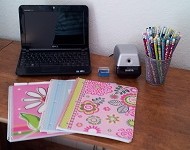
  1. Pencils – Yep, in this modern age of technology in which some authors write entire manuscripts on their phones, my number one writing tool is a pencil. I absolutely LOVE writing in pencil! Now, not just any pencil will do. I need REAL wood – not that simulated plastic-like wood that those yellow #2 school pencils are made of and definitely not those mechanical pencils with the thin, scratchy lead – those actually send shivers up my spine.
Read the full article →


On Reading: Shopping at the Department Store of Ideas

People often ask writers and other creative people where they get their ideas. There’s a sense that there’s something mystical about getting an idea, or magical, or at least not exactly straightforward. If you haven’t read it, Neil Gaiman has a killer post about answering this question. He started telling the truth. “I make them up,” he said, “Out of my head.” People didn’t like this answer. They wanted something jazzier.

This question – where do writers get their ideas? — is at the center of my novel, Perfect Red. It’s the 1950s, the golden age of consumerism in America, and my main character, Lucy, imagines that there is a Department of Ideas, where book ideas are displayed under shimmering lights, in gilded niches on the walls.

Read the full article →


Author Luis Urrea on Family, History, and Magical Realism in Queen of America

I met with author Luis Urrea last month before a book talk he did at Brazos Bookstore in Houston. I talked with him a bit about the independent bookstore (fitting, because we were sitting in one), because it was something that had been on my mind (read his and my thoughts in Do We Need Independent Bookstores?).

Urrea is such an interesting person, the son of a Tijuanan father and American mother (and the grandson of a Mexican woman and an Irish man). I think he felt at home in the Tex-Mex city of Houston, liberally sprinkling his talk with Spanish phrases and good-natured humor about his heritage.

Read the full article →


On Reading: Autographed Books

I always get a secret thrill when I open a book to find a signature written across the title page. I like to think of the author’s hand, resting on the paper, ink turning into a name. There’s a connection there, even if we’ve never met. I know we both spent time with that page, even before I turn it and start a relationship with the words inside.

It’s the same reason I like to go to author readings. If I have fallen in love with a story, I like to see the person who wrote it. The book becomes richer when I view it through the author’s eyes, and every once in a while, I hear something I am meant to hear.

Read the full article →


On Reading: The Importance of Writing Space {with Giveaway}

Editor’s Note: We are happy to welcome guest contributor Syrie James, author of The Missing Manuscript of Jane Austen (linked to Jennifer’s review), discussing the importance of her writing space. Check out her thoughts (and my review of her fun new novel), then leave a comment below to enter to win your own copy.

I have an office upstairs in my house, with windows overlooking our back garden and the treetops and rooftops of the neighborhood. The room is filled with light and lined with wall-to-wall bookcases that are stuffed with books. It includes a comfy white couch for lounging (and thinking) and a big L-shaped desk with space for writing notes by hand as well as working at my computer.

Read the full article →


How a Writing Revolution Saved a School (Peg Tyre): On Reading

Peg Tyre’s book The Trouble with Boys (linked to my review) opened my eyes to some of the problems with educating boys in our traditional school system. Having an intelligent and active boy of my own, I wanted to educate myself on how and why school might not be aimed at his needs, but I felt a little frustrated, because honestly the way things are done is the way they are done, and what can I do about it?

Fortunately, there are people like Peg Tyre, director of strategy for the Edwin Gould Foundation which, according to their website, “works in collaboration with innovative non-profit partners to close this achievement gap.

Read the full article →


On Reading: Real-life vs. imagination

I (Nancy) was happy to have the chance to ask author Charity Shumway to our site today to share something about her love of reading and writing. Charity earned an MFA in creative writing from Oregon State University and a BA in English from Harvard College. Her first novel, Ten Girls to Watch (linked to my review), was released in July. In 2007, she spent nine months reporting on the 50th Anniversary of Glamour’s “Top Ten College Women” contest, which served as the inspiration for her book. Her writing has appeared in that magazine and has also been published by FitnessLadies Home Journal, and Garden Design, among others.

Read the full article →


An author’s Labor Day post: “I couldn’t write without….”

Thanks to Open Road Integrated Media for this guest post featuring author Joyce Maynard, author of The Good Daughters (linked to Nancy’s review).

As we prepare to celebrate workers everywhere this Labor Day, Open Road Integrated Media thought it would be timely to ask some of our authors to share their answer to the question: I can’t write without {fill in the blank}. The results were surprising . . . and inspiring.

Maybe because my father was an artist — a man who stood before his paintings, palette knife in hand, slashing color on the canvas — I formed, early, the picture in my head that creative endeavor should involve physical activity.

Read the full article →


Q & A with Emily Giffin {with Giveaway link}

I get pitched a lot of books. Earlier this summer, I decided my stack was getting too big, and I determined to not accept any more. But the pitch for Emily Giffin’s latest novel Where We Belong (linked to my review with giveaway) included the first chapter, which ends with 36-year-old Marian confronting on her doorstep the daughter she gave up for adoption 18 years earlier, and told no one about. I was hooked, and requested the book. Although Emily Giffin is the best-selling author of novels such as Something Borrowed, Something Blue, and Love the One You’re With, this was my first time reading one of her books.

Read the full article →


On Reading: Escaping Reality Through Fiction

I (Jennifer) was happy to have the chance to ask author Brenda Baker to our site today to share something about her love of reading and writing. Born in Toronto, Brenda spent 35 years writing computer programs in Canada, the United States and the Netherlands, before becoming a novelist. Her passion is exploring new cultures, with knitting and reading tied for second place. She likes cats, but resists owning one herself, since everyone knows little old ladies can’t stop at just one.

Brenda’s recently released book, The  Elusive Mr. McCoy (linked to Jennifer’s review) is a richly emotional journey of two women drawn together by an unexpected and unwanted bond.

Read the full article →


Scribble Diary {with Giveaway}

My eight-year-old son had talked a lot about wanting to keep a diary. I thought that was a great idea, so I gave him a notebook as he requested, but he didn’t use it a whole lot. I’m still hoping to tap into that desire, because as I writer I know how therapeutic and inspiring and cathartic writing can be.

With two creative and artistic kids, I definitely thought that The Scribble Diary: My Brain Right Now by Lisa Currie could help them entertain themselves as they examine their days.

Read my full review (and enter to win one of TWO copies) of The Scribble Diary over at 5 Minutes for Mom today.

Read the full article →