Short Stories and Essays


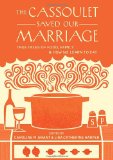
cassouletThe Cassoulet Saved Our Marriage is a fascinating book that is a joy to read. A collection of short personal essays followed by recipes, written by a variety of people, the book truly does look at food and the place it plays in our lives–how it goes beyond mere sustenance to offer a glimpse into what we value, how our families are formed, how we show love, how we honour our ancestors, and so much more.

“Food is never simply about what you eat,” say editors Caroline Grant and Lisa Harper in the introduction, and they are right. The way we think about food often reflects our own mothers (or occasionally fathers), our own place of origin. And now, as parents we try to pass things along to our children, along with trying to get fussy toddlers to eat or growing teenagers to stop eating quite so much. It’s a way to show honour to guests, to show off our cooking abilities, to bring far-flung family and friends together for an evening.

The Cassoulet Saved Our Marriage is divided into three parts. The first, “Food,” dives into our memories. The very first story, of moving cross-country and feeling desolate and alone until you find where to find the foods you like to eat, was really moving to me personally. I well remember the great relief I felt, shortly after moving my family including our 3 toddlers to the desert country of Mauritania, when I found spaghetti, tinned tomatoes and ground beef at a very small and dusty corner store, and I knew I could at least feed my family something familiar until we all got used to sitting on the floor and eating fish and rice with our hands. This section includes a wonderful essay on how, sometimes, a bite of asparagus, poached egg and potato salad can bring hope to an overwhelmed mother. It is about the one taste on your tongue that makes the world come right, that evokes a deep satisfaction that all is right with things at this moment.

Section two, “Family,” looks at how family shapes how we eat and the kinds of foods we value. Not surprisingly, there are a lot of mothers in this section, but there are also some fathers and siblings, including one rather lovely story about a brother who teaches his sister how to make “a food with a name,” Chicken Milanese, and how it connects them, which made me think of my own brother and how he introduced me to the joys of wine-tasting.

The third section, “Learning to Eat,” talks about how we teach children to eat, and how we impart more than simply a desire that they eat more than only white foods, but we impart values, politics and religious traditions, whether that be special foods for special holidays, or how our children make choices when let loose in the dubious realm of the school cafeteria.

The title eassy, “The Cassoulet Saved our Marriage,” is an account of a crumbling marriage that is saved by a yearly tradition of working together for 3 days to prepare a proper cassoulet and inviting others to share it. It’s a wonderful story of how food does so much more than simply sustain physical life–it supports the soul as well.

The Cassoulet Saved Our Marriage is a great book. Its collection of essays range from serious to fun, and there’s a fantastic collection of recipes as well. It’s not at all a “foodie” collection, but rather stories how real people eat, and what memories are evoked or created in each mouthful.


This post may contain affiliate links. When you use them, you support this site. Thank you!
See our Disclosure Policy for details.

My Planet: Finding Humor in the Oddest Places by Mary Roach

I’ve been meaning to read Mary Roach for a while. I’ve heard that she can tackle a subject (space, sex, death) in a way as to provide information in an entertaining, and even funny, way, so when I was given the opportunity to receive a review copy of this collection, I jumped at it with no hesitation.

Please click over to read my full review of My Planet on 5 Minutes for Mom. You can find out exactly why I enjoyed reading this funny book of essays, and then you can enter to win your own copy.

Read the full article →


Not Less Than Everything

Not Less Than Everything is a collection of essays written by various Catholic artists, all on people who’ve inspired them. Editor Catherine Wolff recognizes that we are creatures of community and learn from observing others, that we “spot the rhyme” between our own lives and those of people we admire, study and emulate. As she has personally wrestled with imperfection in the Roman Catholic church, she sees that others through the ages have challenged the church and truly been heroes of conscience. “To what extent is anyone required to submit to those in authority who have seriously compromised themselves and others?” she asks in the introduction.

Read the full article →


You Tell Your Dog First

I enjoyed Alison Pace’s novel A Pug’s Tale (linked to my review) a couple of years ago, and so when I was offered You Tell Your Dog First, a book of essays about a dog and her owner, I jumped at it. The promise of tales of a dog in the city (The City, NYC) and a single woman in The City gave me no pause.

I was delighted. These essays were humorous. Some essays were introspective and reflective, others (most) were humorous. Several of them had me laughing out loud while reading in bed, which always causes me to get weird looks from my husband.

Read the full article →


Moranthology

I’m sitting in the doctor’s office with my 17 year old son, waiting for his appointment, and of course I’m reading while I wait. It’s what I do, how I find time to read. I’m reading Caitlin Moran’s latest, Moranthology, and I start to laugh. At first it’s a silent giggle. I keep reading, shoulders shaking, aware that Elliot keeps giving me horrified looks. Suddenly, I can’t help it, I snort with laughter. Elliot is mortified. “Mom!” he hisses at me, glancing around at the few other bored occupants of the room. In his mind, they are all staring at me with undisguised contempt, but in real life, no one has noticed.

Read the full article →


The Books They Gave Me

The Books They Gave Me: True Stories of Life, Love, and Lit has a throwback vintage sort of look to it. The look, along with the premise, just scream “Give me to a bookworm!”

Jen Adams has collected stories from various people — told anonymously — about a gifted book that was especially meaningful. Some meant good things, like “This person totally gets me,” and others foreshadowed the lack of knowing that ultimately resulted in growing apart.

The entries are each formatted in the same way: a colored picture of the book being profiled at the top, followed by the story.

Read the full article →